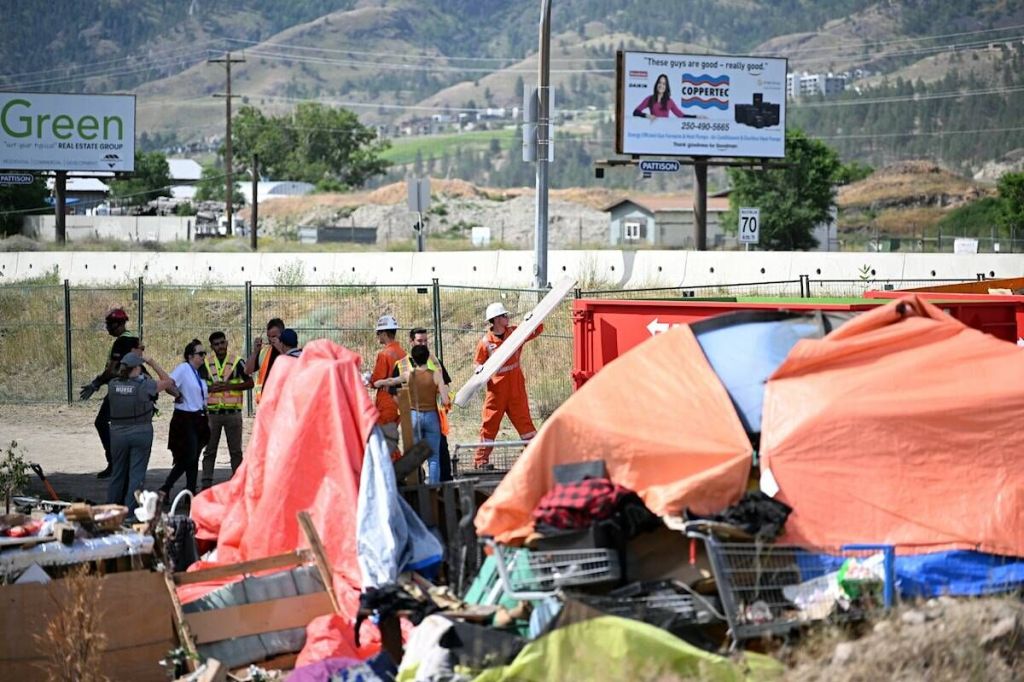
People always want a solution to homeless encampments, right up until one is provided.
It’s like NIMBYism on steroids. And it happens everywhere. We’ve just seen it in Surrey and Penticton.
So, in the spirit of not just complaining, what can we learn from past experiences and use as a building block? People can’t just be abandoned. As a society we have an obligation to assist those in need, to help them rebuild and reintegrate and to create a safer community for everyone.
No pleasing everyone
The first step, whether a local government or a social service provider, is setting a threshold of what level of opposition will end the project. There will be those who can never be persuaded that people living rough are not the cause of their own downfall and should accept all liability. To this group, it’s laziness and choice that lands people in this situation. There’s no acceptance of addiction or mental health or a crap economy that beat them up.
Is that your entire community? Safe to say not. There is another segment that wants to help and is motivated to provide support and care. They also usually lack the resources to meaningfully impact the situation.
Then there’s the large middle: they care, they want people to get help and they want the feeling of safety to be restored. They’re also confused as why it just seems to be continuously getting worse.
Politicians need to be prepared for a level of hostility to plans and be reminded that echo chambers are not representative. Being prepared for vitriol and having a way to gauge its depth is vital. Some blowback should be expected but it shouldn’t send the project off course.
Talk early, talk often
As traditional media wanes, the motto Speed Kills is more apt than ever. If you’re not prepared from the start of the announcement to provide full information, if you have not been seeding the message for months, then the vacuum will be filled by those opposed or ignorant (sometimes they’re both). The quick sharing of that info will be deadly – the speed of disinformation will kill rationale discussion.
There’s a tendency to make a grand announcement – “We will work together and find a solution” – and then the work is all done behind closed doors. One day there’s an announcement – “We did it!” – and the community feels left behind.
Then they have questions: It’s going where? You’re making a fancier encampment? You’re shuffling them around? You’re creating a little ghetto?
It’s awkward, but you have to have be seeding the solutions. Op-eds from service providers, tours by politicians of similar facilities and regular updates on progress. Not everyone will like it but they will see you being transparent and more willing to give you a fair hearing. It’s the no surprises rule in action.
Doing all this days and weeks later is simply a recipe for disaster. Trust in politics is at a real low and, whether fair not, leaving the impression you’ve been forced into sharing information only reinforces the lack of faith.
Listen, really listen
The talking part is important but so is taking on the feedback and acting on it. No one believes that government has all the answers and is going to get it right on the first swing (unless you’re sending money). If you’re bringing people along and you’re engaging with them, they will have some perspectives that will save some pain in the long run. Also included in that is the people living the experience. Getting that perspective will aid in developing a plan that can actually work.
Set expectations
Governments that say here it is problem solved, feedback not required, are doomed to see worthy projects run aground. Anyone remember the NDP’s plan for autism care? Or the BC Liberal’s bus pass?
It goes against bureaucratic instinct to do the above in a real way. As subject matter experts, they want to lead and show value. They want to deliver on what politicians are asking of them. But times, they are a changing.
The public want details. How many homes? How long are people there? How are they selected? What support are health authorities providing? What about job training? They don’t want to hear there will be wraparound services provided – that phrase has been rendered meaningless.
Working with the community to build the plan helps to set expectations, it identifies potential pitfalls and gets buy-in from most fair-minded people. The public will understand that no solution is going to be perfect, especially if they have a sense they’ve been part of crafting it.
If they’re not, they will keep trying to poke holes to see what else you’re hiding. The NIMBY crowd might toast the result but the losers will be the community and those who need help.
The bottom line is that achieving community buy-in is a process. Starting small, showing results and then proposing ways to improve service is the recipe for success.
 42nd & Grace
Leave a comment