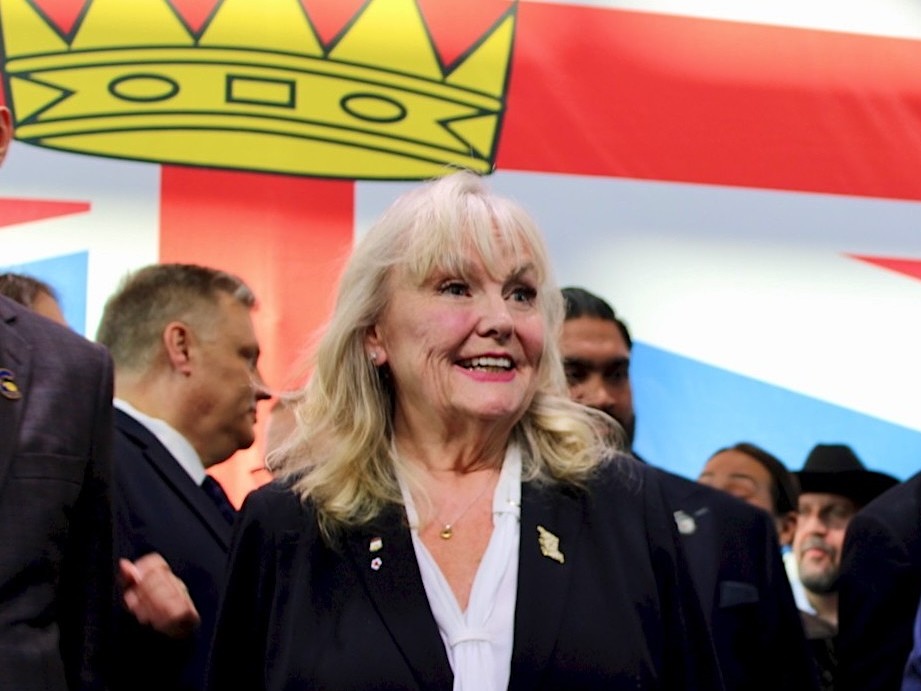
Think of the recent BC Conservative leadership race this way: Kerry-Lynne Findlay told former BC Liberals they weren’t invited to the wedding, but they were welcome at the reception — as long as they brought gifts.
The race to replace John Rustad was always going to be a purity test and Findlay delivered one. She leaned hard into the idea that this is a party for conservatives and narrowly edged out Caroline Elliott, whose apparent sin was having once kept company with notorious moderates like Gordon Campbell and Stockwell Day. No big tents. No free-enterprise coalitions. Just the faithful.
The problem is the math. There is nothing in current polling or BC’s electoral history to suggest Findlay can win government without the votes of the people she just uninvited. That’s not a message problem — it’s an arithmetic one.
Her one significant asset, for now, is the current occupant of the West Annex. Premier David Eby, possessed of a reverse-Midas touch, has become something of an unlikely unifying force — a government that looks conspicuously fresh out of ideas has a way of doing that. But the odds of Eby leading the NDP into the next election are thin. When he goes, he takes considerable political baggage with him. His most likely successors — Ravi Kahlon, Nikki Sharma and Brad West — are each capable of running a reset. Think Christy Clark stepping out of Gordon Campbell’s shadow, or Glen Clark stepping into his own. A new face changes the dynamic considerably.
There is a further challenge Findlay will need to manage carefully. Successive right-of-centre leaders in this province — some more successfully than others — have understood that elections are won on kitchen-table issues, not social debates. The discipline required to hold that line is significant. Findlay has shown a comfort with culture-war terrain that her predecessors actively avoided. There is already chatter that Tara Armstrong — the Marmite of BC politics — could return to the fold. Whatever one thinks of Armstrong, her presence sends a signal, and not a reassuring one to the voters the party needs to win.
Interim leader Trevor Halford — full disclosure, a longtime friend — understood this instinctively. He spent his time in the role getting caucus to stop shouting at the wind and start talking about things that actually move voters. Under Findlay, it is easy to imagine the opposition message of the day being derailed by a freelancing MLA chasing a grievance. It happened repeatedly under previous leaders and cost them dearly.
The BC Liberal playbook worked because they stayed focused. John Horgan ran a remarkably similar operation — disciplined, issue-driven, relentlessly on message. Both achieved majority governments. Neither happened by accident.
As a former Harper cabinet minister, Findlay has had a front-row seat to one of the more effective exercises in political discipline this country has seen. Harper gave room for differing views within caucus, but there was never any ambiguity: those differences would not be permitted to distract from the goal of winning government. No purity tests — just a ruthless focus on what mattered.
Findlay can take a position on the divisive social questions and let it stand. State it clearly, don’t retreat from it and move on. The endless recursive debates around SOGI, trans rights and the rest of it are a trap — one her opponents would happily spring for her every week if she lets them.
To finish the analogy: if Findlay wants to renew her vows and become premier, she is going to need to invite a lot more people to the party. Her leadership vote was strong where Conservatives are already strong. The question is whether she has the discipline — and the strategic instinct — to expand that map, hold her team together and channel the very real political angst in this province before someone else does.
There is a lot to work with. The question is whether she’ll spend it wisely.

 42nd&Grace
Leave a comment