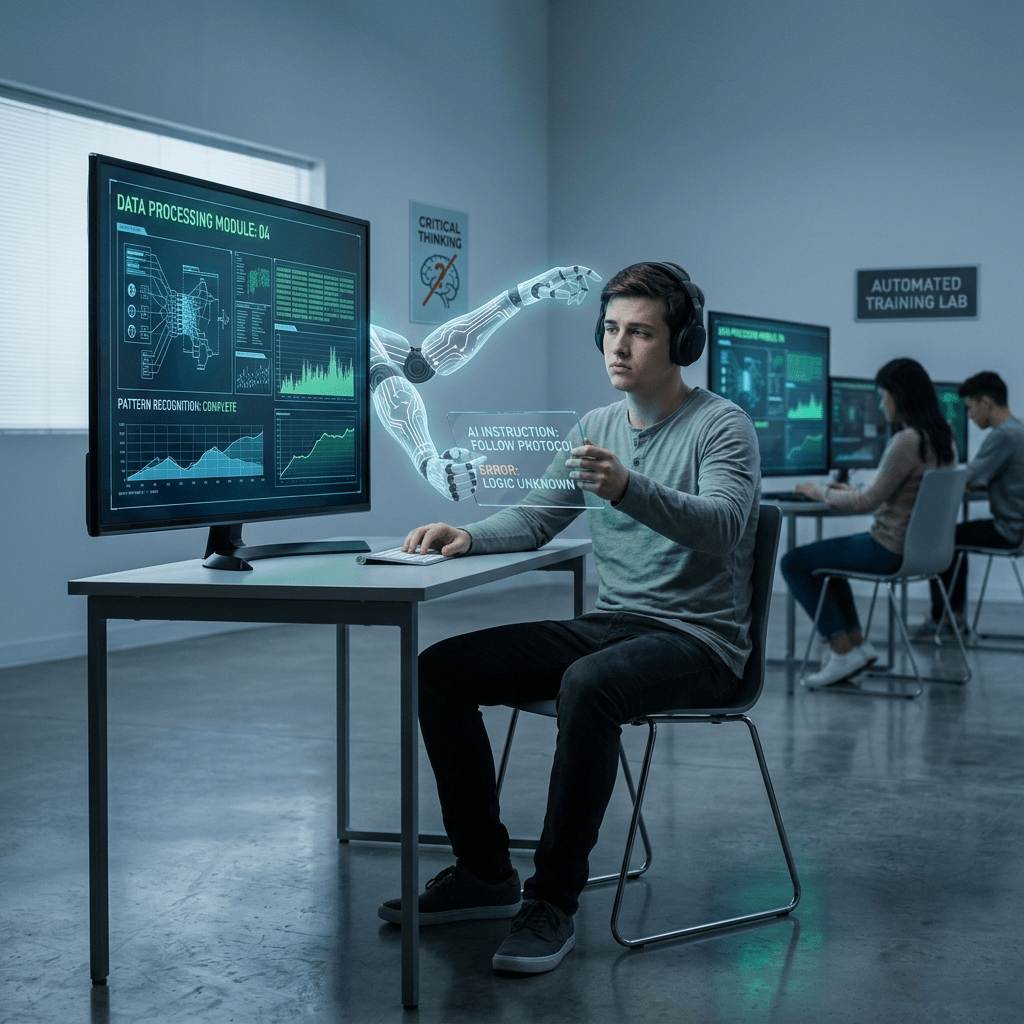
The problem with AI is not that it’s learning and improving. The concern is that it has quickly become a convenient excuse not to train the next generation.
This came up during the annual golf trip. Strong opinions are common, loud debate frequent and resolution happens occasionally, but this topic seemed to draw the lines deeper and sharper than usual.
On one hand: why hire a junior person to do the traditional grunt work that AI is now capable of handling? Need a base press release, tell CHAT PT what’s needed and in a fraction of the time you have a document that you can edit, improve and finalize. And a lot cheaper too.
That argument is totally valid. But it’s missing one thing.
Experienced professionals have the judgement, context and feel for what belongs in the document, when subtle hints work and when it’s time to explicitly state something. Those abilities were built over years of feedback, revisions and the occasional page covered in red ink. That process of drafting, researching, summarizing, preparing briefs, taking notes and watching how decisions get made is what eventually moves someone from producing documents to advising on them.
The question now is: where will the next generation learn those skills? If AI replaces early‑career roles entirely, when will emerging communicators develop judgment? When will they make mistakes early enough for someone to catch them and turn them into learning moments? And what happens if their only teacher is an algorithm?
There is also a challenge for old pros. When AI produces the first draft, a sameness begins to creep into the work. In corporate and government environments, that consistency can be useful as there is a formula that AI can replicate it accurately. But uniformity can also become monotonous. Accurate, yes; boring, oh my, yes!
In today’s fragmented world, where unique voices have the best chance of straddling multiple silos, you want a hint of that creativity. A motivated junior employee – hungry in every sense – can introduce a spark of originality. AI does not naturally provide that. Human creativity offers unexpected angles, fresh phrasing and new ways of seeing a problem. That real person will provide a spark and you can decide whether to fan it or snuff it. The choice is what matters, as the choice is part of the craft.
AI can still play a constructive role. It can demonstrate structure, formatting and examples. It can accelerate rote tasks and help early‑career staff understand patterns. But it cannot replicate the lived process through which judgment is formed. The mistakes are the great teacher.
The broader question is what a profession loses when it stops training. If foundational roles disappear, how will organizations maintain institutional memory? What happens when senior people retire? How do industries preserve the tacit knowledge that is usually passed down through apprenticeship, not automation?
These are not questions about technology’s capability. They are questions about continuity and about how future professionals will learn the skills that experience once taught directly.
It’s about how we look at people and what they bring. The impetuousness of youth, when combine with the wisdom of struggle can be a powerful tool. AI should be a tool, not a replacement; a way to help the next generation find their way and take on the challenges early and with a mentor.


Leave a Reply